
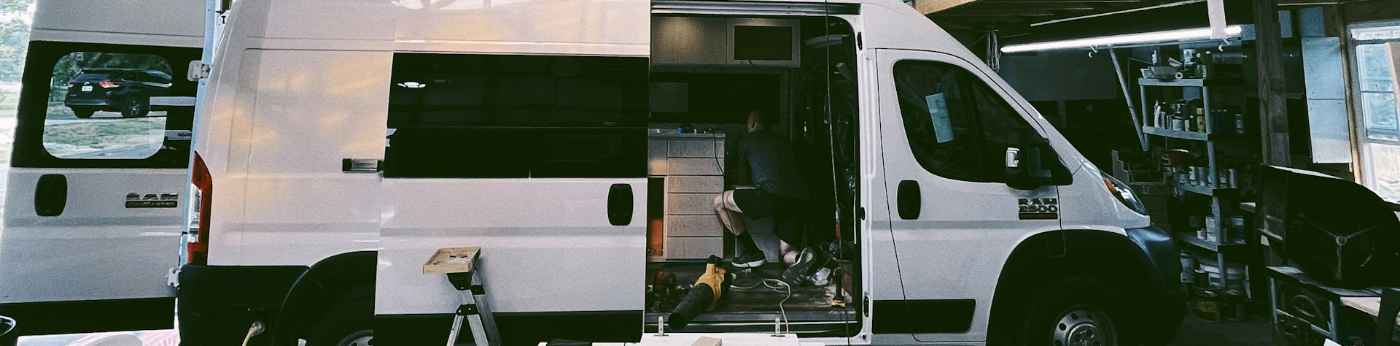
Building your own camper is more than just a DIY project.
You’re creating a personalised home on wheels that fits your lifestyle, budget and travel goals.
A self-built camper offers freedom, creativity and the chance to design a very special space tailored to your needs.
If you love it, it becomes an extension of yourself.
Note: There’s a big difference designing a camper to go away in for a week or two, and something you can call home for 5 or 10 years or more. Choose and design accordingly.
Since there’s no single “right” way to build a camper, this guide will help you explore your options and take the first steps toward your unique build.
Heads-up! I’ll be going into more detail on various aspects of the planning and the build in the blog.
“Home is not a place, it’s a feeling.”
– Cecelia Ahern
The vehicle you choose is the foundation of your camper build.
It determines your available space, fuel efficiency, and how off-grid capable your setup can be. Some popular options include:
Important Considerations:

Being a taller person, my main focus was to find something tall enough to stand upright in.
This proved a lot more difficult and took a lot longer than I anticipated.
This is one instance at least, where shorter people have a big advantage.
As I was a full-time driver then, I was able to check out 100’s of vehicles, but even the tallest vans were just not tall enough for me.
I ended up getting a step-van. They are very rare in Australia, though common in the States for postal vehicles, etc. I’ve never seen another one here.
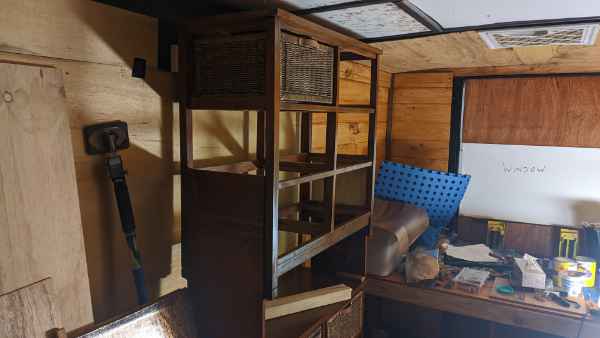
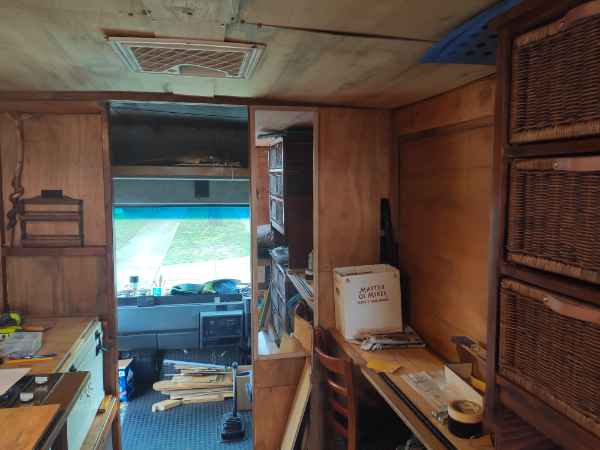
It’s 35 years old, heavy, strong, secure and some would argue ugly, but I love it with a passion! Nothing is ugly to a person who loves it.
The outside is very utilitarian – kind of like a brick, but the log-cabin inside is awesome.
I’m going to go into my own planning process (ie. the reasons I chose to build as I did, and why I made the purchasing decisions I made), the audio design, the proportions, the build, what I added later, and lots more in the blog, as I get time.
Please check back from time to time as I’ll be adding content regularly.
Pro Tip: Insulation is going to make all the difference to your amazing rolling home. Take it very seriously. I’ll elaborate more in the blog.
Start planning, but only once you have a very clear idea of the size of the vehicle you’ll be rolling in.
First, plan the layout after seeing what’s been done before.
Front of mind must ALWAYS be “Will it fit?” Then, how will it fit. Spin it around, try the alternatives. Make a thousand measurements. Think it through and measure again. Be clever. Your cleverness will stay with you for a long time.
Available space is almost always smaller than you imagine.
Adding insulation and lining to your living space will decrease the measurements. Important.
I can’t be insistent enough that you mustn’t go on a shopping spree and collect a whole assortment of stuff you just can’t fit into your new small space. Measure many times. THEN decide.
Designing your camper’s interior starts with how you plan to use the space. Think about daily activities like sleeping, washing, cooking/washing up, working, and relaxing.
It’s a great idea to be able to do things such as cooking both inside and outside, depending on the weather etc.
“Live the life you’ve imagined.”
– Henry David Thoreau
Any comments, contributions, thoughts or insights?
We’d lerve to hear from you.
Common Layout Elements:
– Sleeping: Fixed bed vs. retractable bed, vs. convertible seating.
– Kitchen: Indoor vs. outdoor, or both, cooking.
– Storage: Overhead cabinets, under-bed storage, modular shelving. Roof, back bumper storage.
– Seating: Bench seats with storage underneath or foldable options.
Pro Tips:
A functional camper involves more than just a bed in the back. Here are the core systems to plan:
A DIY camper can range from a budget build to a luxury conversion. Here’s how to stay on track:
“Freedom lies in being bold.” – Robert Frost
Any comments, contributions, thoughts or insights?
We’d love to hear from you.
“Create a life you don’t need a vacation from.”
– Unknown
Any comments, contributions, thoughts or insights?
We’d love to hear from YOU!.
I’m going to devote a small post here to insulation as I know how misunderstood and under-rated it is.
As someone who has never spent much (or any) time living in a vehicle, you are probably not really aware of the critical role heat and cold play in your comfort and safety.
When I say “critical”, I mean you could die from either extreme, hot or cold, if not prepared. Did you read what I just said? I shit you not.
A vehicle is subjected to extremes of temperature, varying far more than when you’re sitting in the front driving, with the heating or A/C on.
I’ll go into this in more detail in the blog, with some handy tips and recommendations.
“Simplicity is the ultimate sophistication.”
– Leonardo da Vinci
Any comments, contributions, thoughts or insights?
We’d love to hear from you.
You don’t need to be a professional builder to create a functional camper, but some basic tools and skills will go a long way:
You’ll get amazing inspiration on Pinterest and endless tours and how-to’s on YouTube.
These are your go-to places.
You’ll find yourself noticing campers all around you as you drive as your eye becomes accustomed to the varieties.
Before your first trip, make sure your camper is ready for the road:
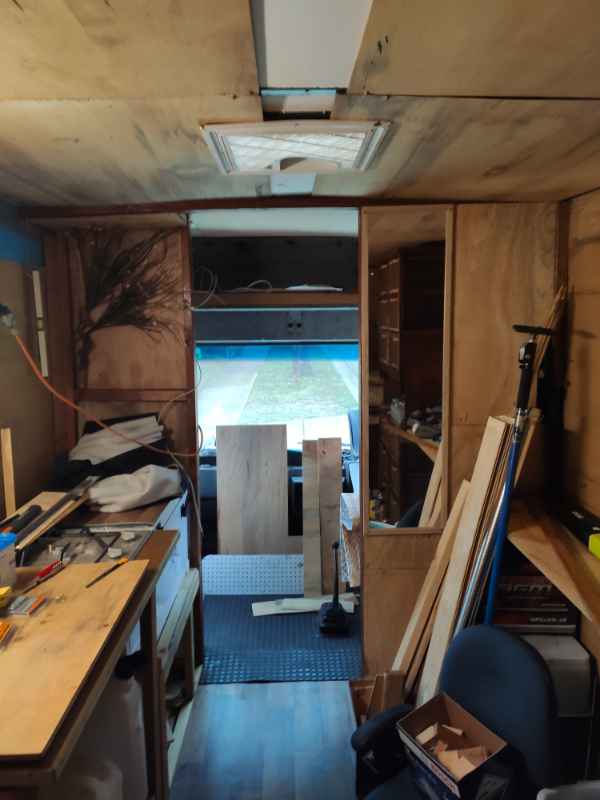
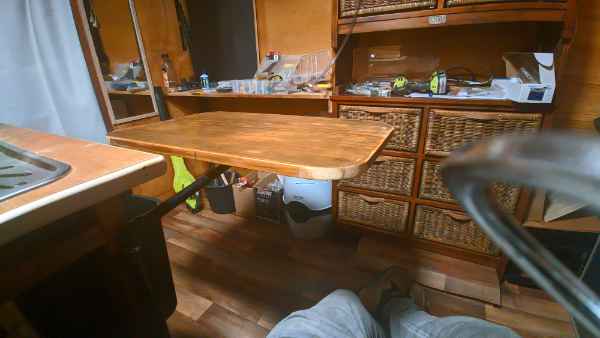
One thing is certain – for the life of your camper, something will need fixing, changing or upgrading. Count on it.
Any comments, contributions, thoughts or insights?
We’d love to hear from you.
Life is yours. Waste no time.
Office : The Chariot
Address: Roads of Australia

About Life Unmapped
Hey, I’m Marley, the traveller behind Life Unmapped – a seedling of ideas for anyone considering other ways to make life work.
There’s tips and inspiration for people struggling with the cost of living, and for those craving more from life.
It’s still a young blog and I’ll add to it whenever articles are completed.
Please call back often and enjoy new content.
Skill set:
Do you have a story? Let’s chat.
“It is not the strength of the body that counts, but the strength of the spirit.” – J.R.R. Tolkien
Privacy
Terms
Attributions
Disclosure
Some links on here are referral links, which means I may earn a small commission if you make a purchase through them – at no extra cost to you.
These are only products & services I have personally used, or those trusted friends have shown & recommended to me and I truly believe to be great items.
Thanks for supporting Life Unmapped! 😊
Travel Gear and Stuff
Budget-Friendly Travel Gear
Must-Read Books on Simple Living
Top Tools for Digital Nomads
Please!

Quick links:
Start Here About Me
Nomadic Living Tips
Self-Sufficiency Hacks
Copyright © 2024-5 *Life Unmapped*
(All Rights Reserved).
F*CK plastic waste – drink tap water!